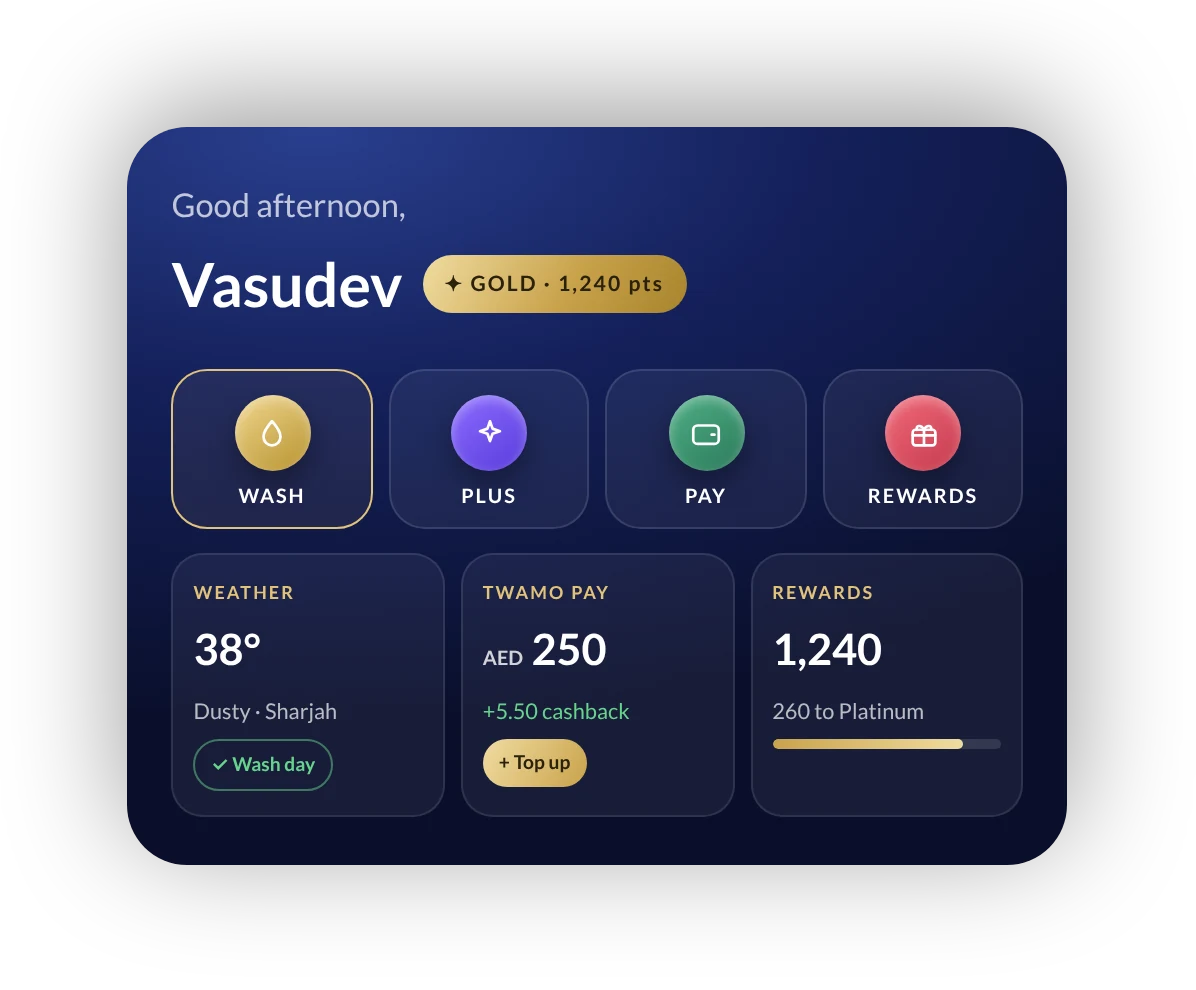
Home widgets answer three questions before you tap anything
Component 01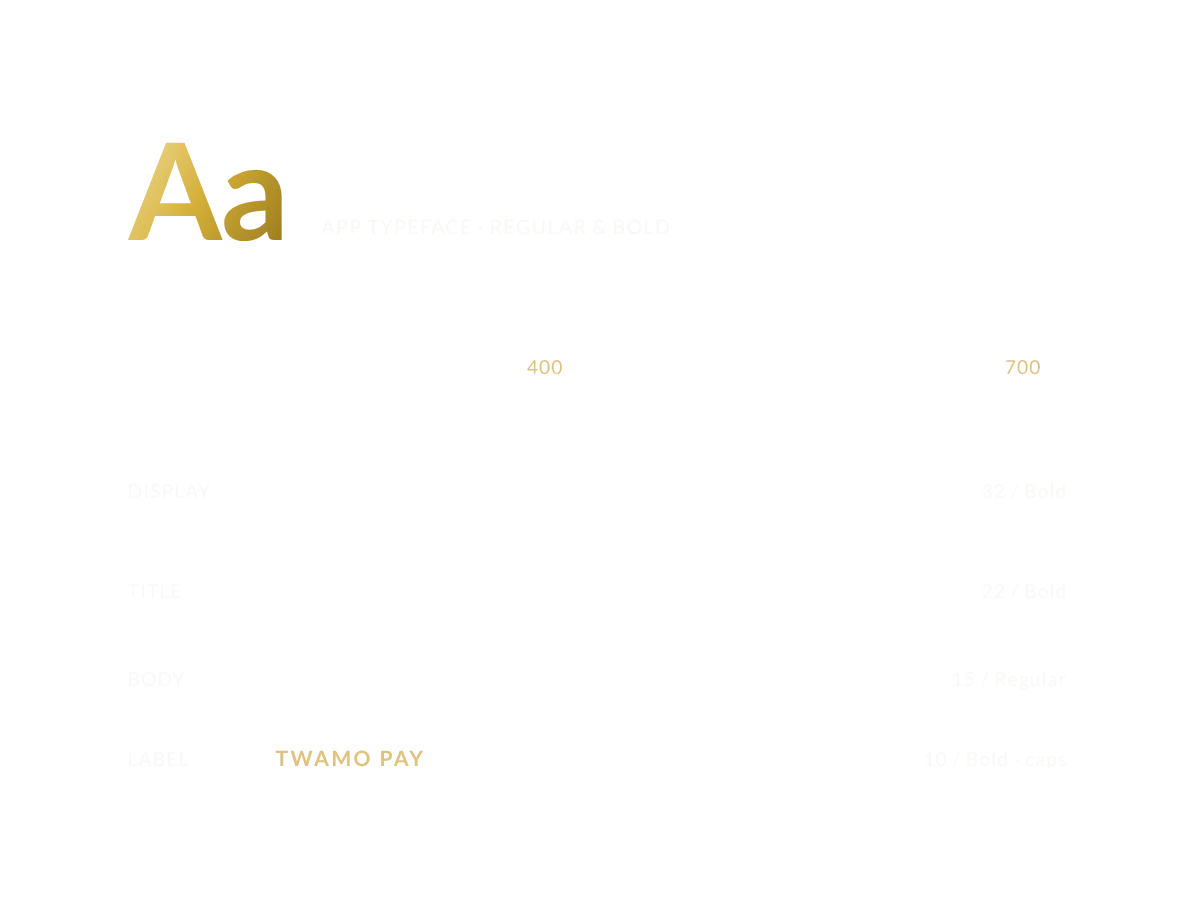
Twamo is a B2C automotive service app for the UAE. I designed the booking experience end to end, from sign-in to live tracking, along with the design system, the Arabic version and a clickable prototype. This case study focuses on the booking flow and Twam, a voice assistant that drafts a booking from one sentence.
Twamo connects drivers with car care providers who come to the car: at home, at the office or in a mall car park. A booking means choosing a vehicle, a service package, a provider, a place and a time, then paying in the app and following the specialist on a live map.
The brief was to make booking quick for people who book the same thing every time, without hiding the choices a first-time user needs. I covered user flows, information architecture, wireframes, UI, the design system and the prototype.
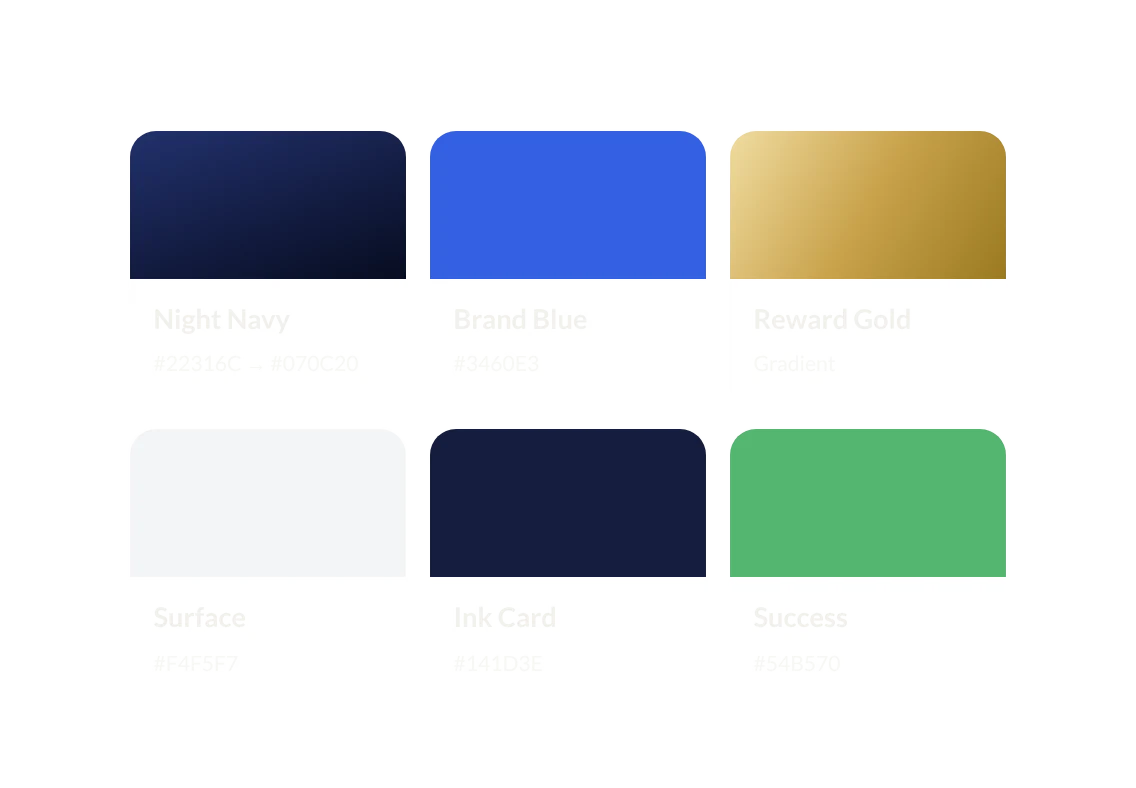
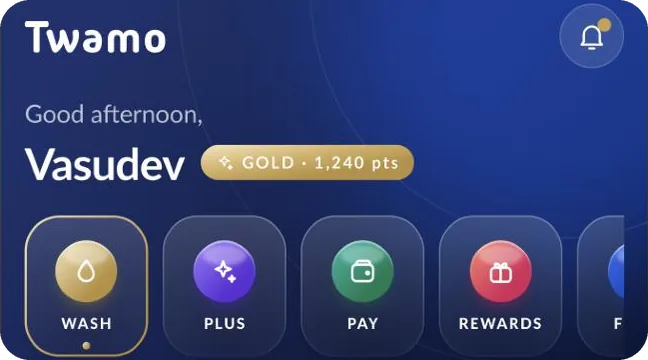
The app runs on two surfaces: a deep navy for moments that should feel premium, like home, the assistant and the splash, and a light grey for the work of booking, where clarity matters more than mood. Blue is for actions. Gold is kept for rewards, the voice button and anything you've earned.
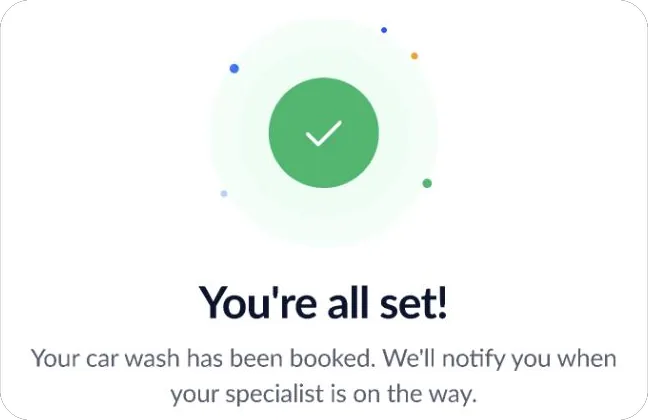
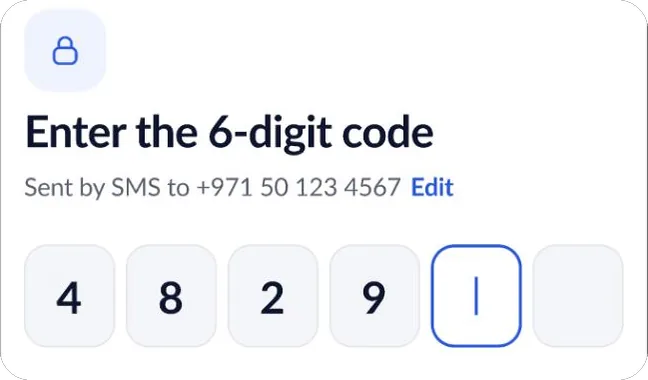
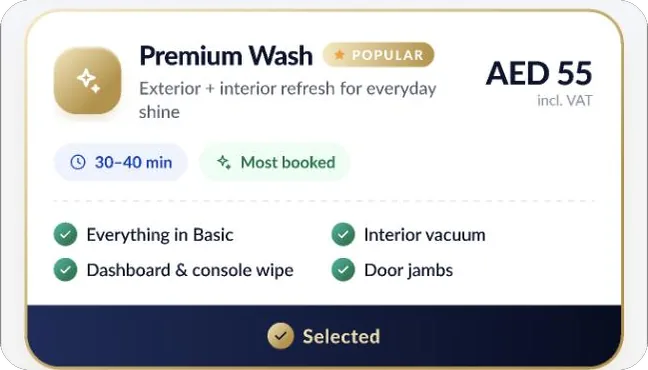
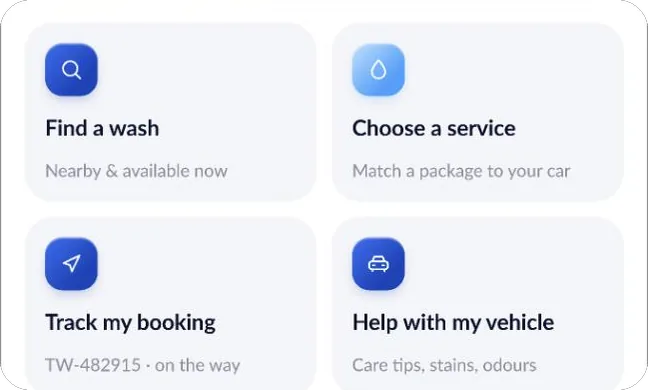
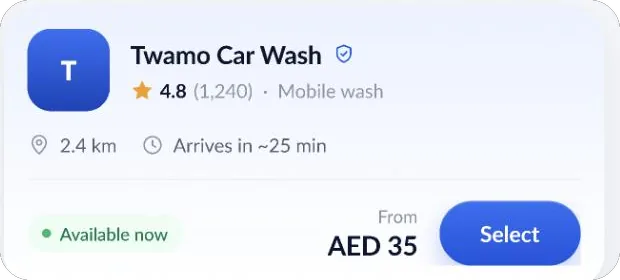
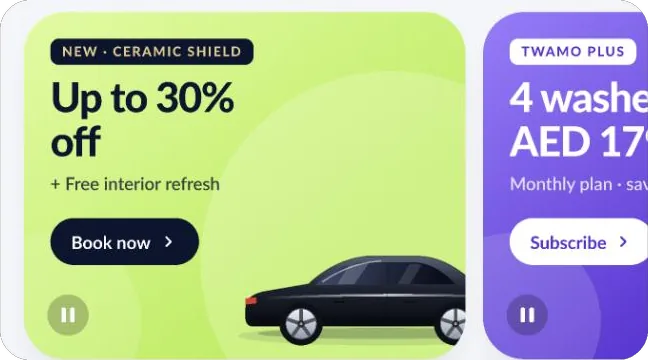
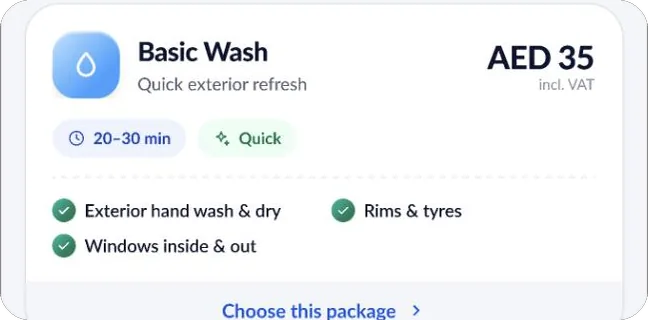
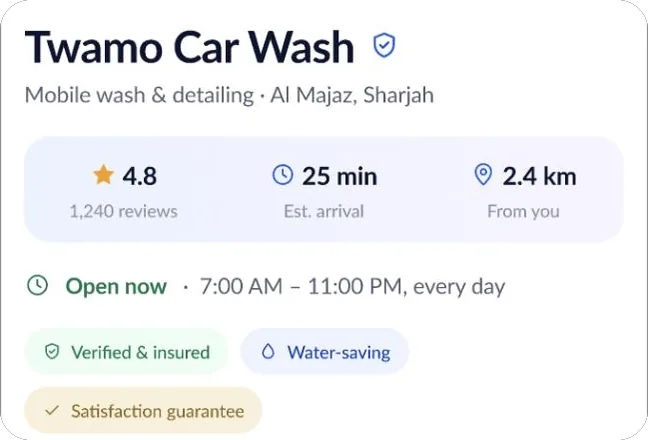
The cards below are components from the Figma library, shown as they appear in the app.
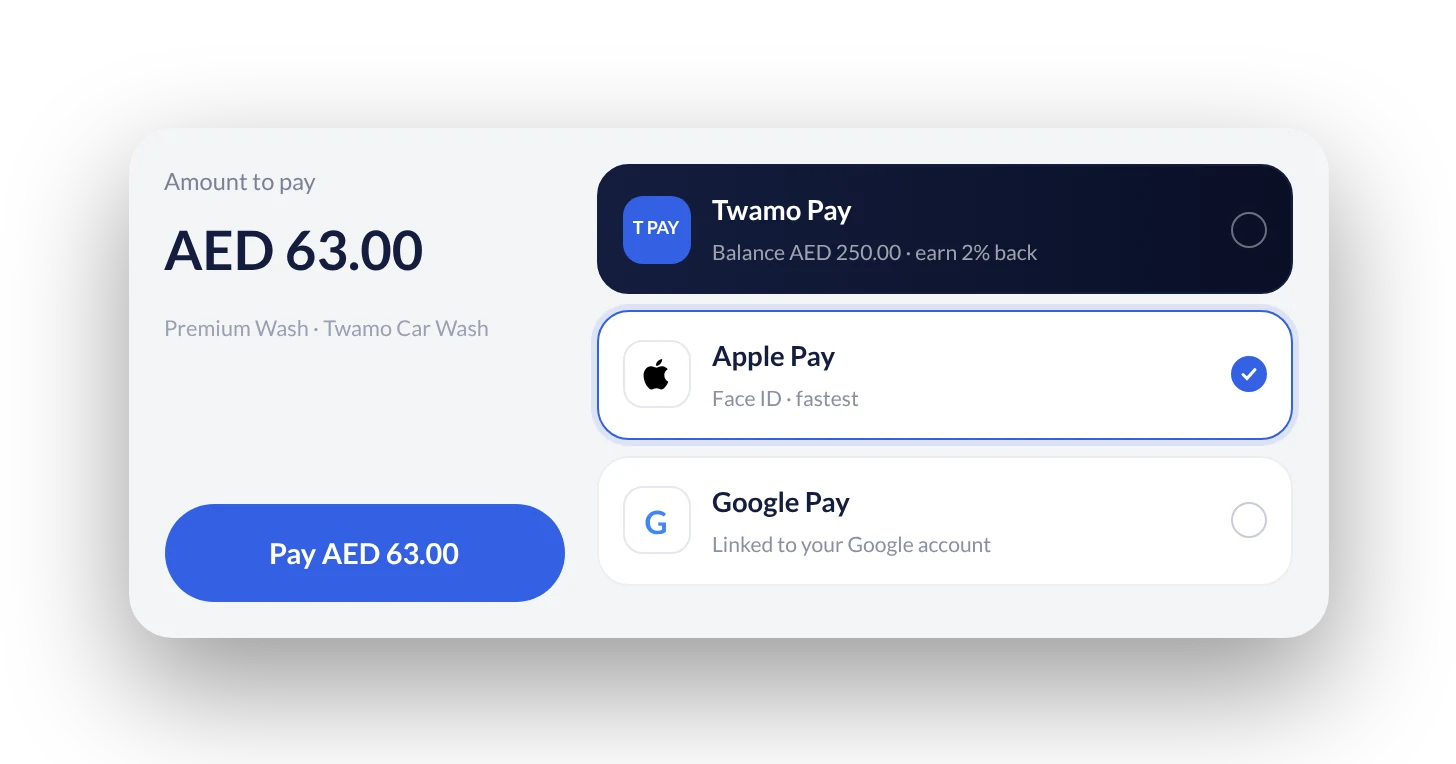
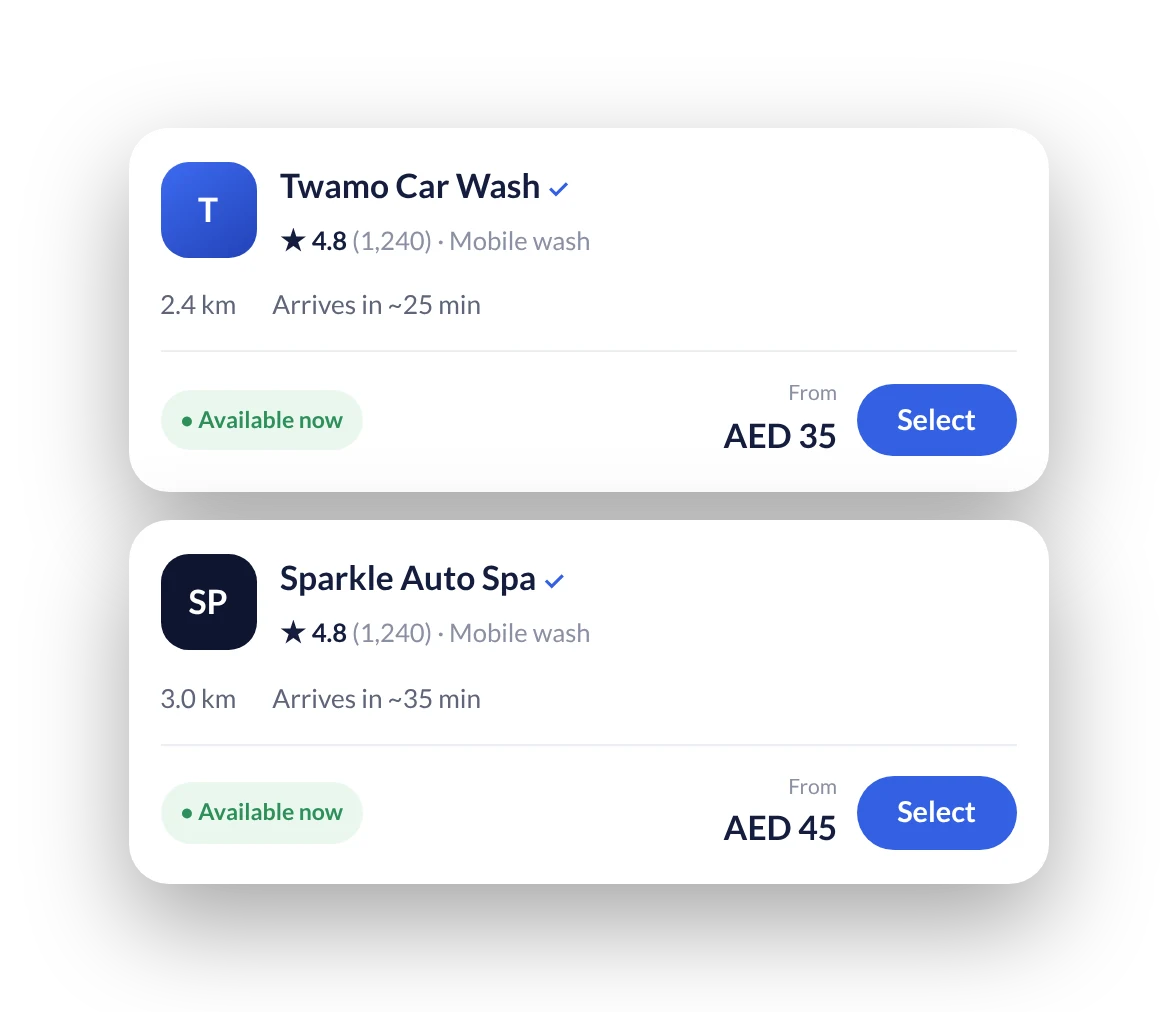
To book a wash you have to settle six things: which car, which package, which provider, when, where the car is parked, and how to pay. Each one is simple. Together, on a phone, they turn a small errand into a form.
Most people book the same wash for the same car at roughly the same place every time. So I asked a simple question: what if the app already knew most of the answers, and you only had to confirm them?
Most bookings repeat. These users need their saved car, address and usual package filled in, so booking becomes a confirmation instead of a form.
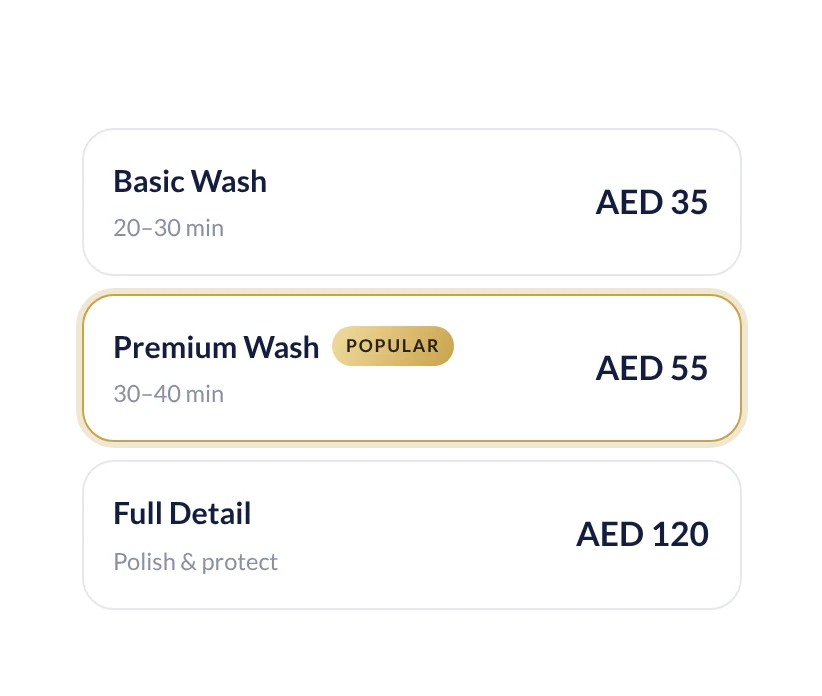
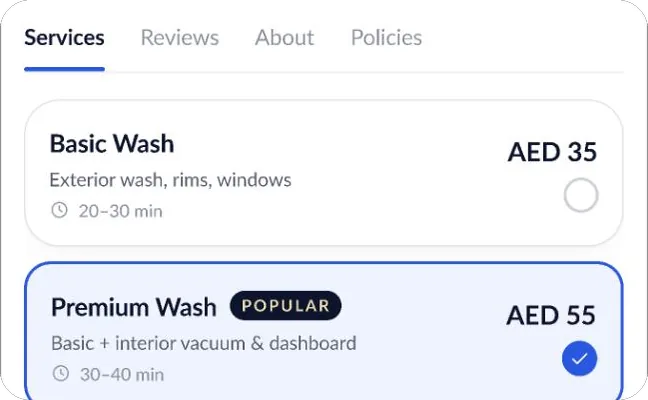
New users want packages, prices with VAT, ratings and arrival times side by side before they trust a provider with their car.
Layouts, icons and the assistant button mirror for right-to-left reading, and the flow stays the same as in English.
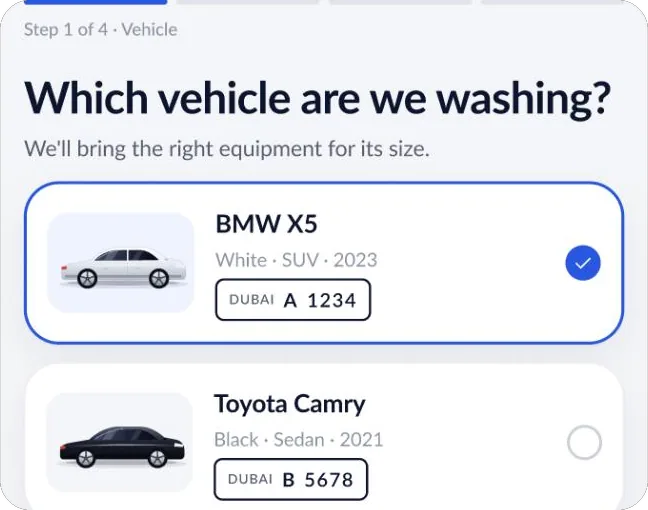
Vehicle, service, location, then date and time, with a progress bar at the top and the price always visible at the bottom. Nothing is hidden, and every step can be changed from the summary.
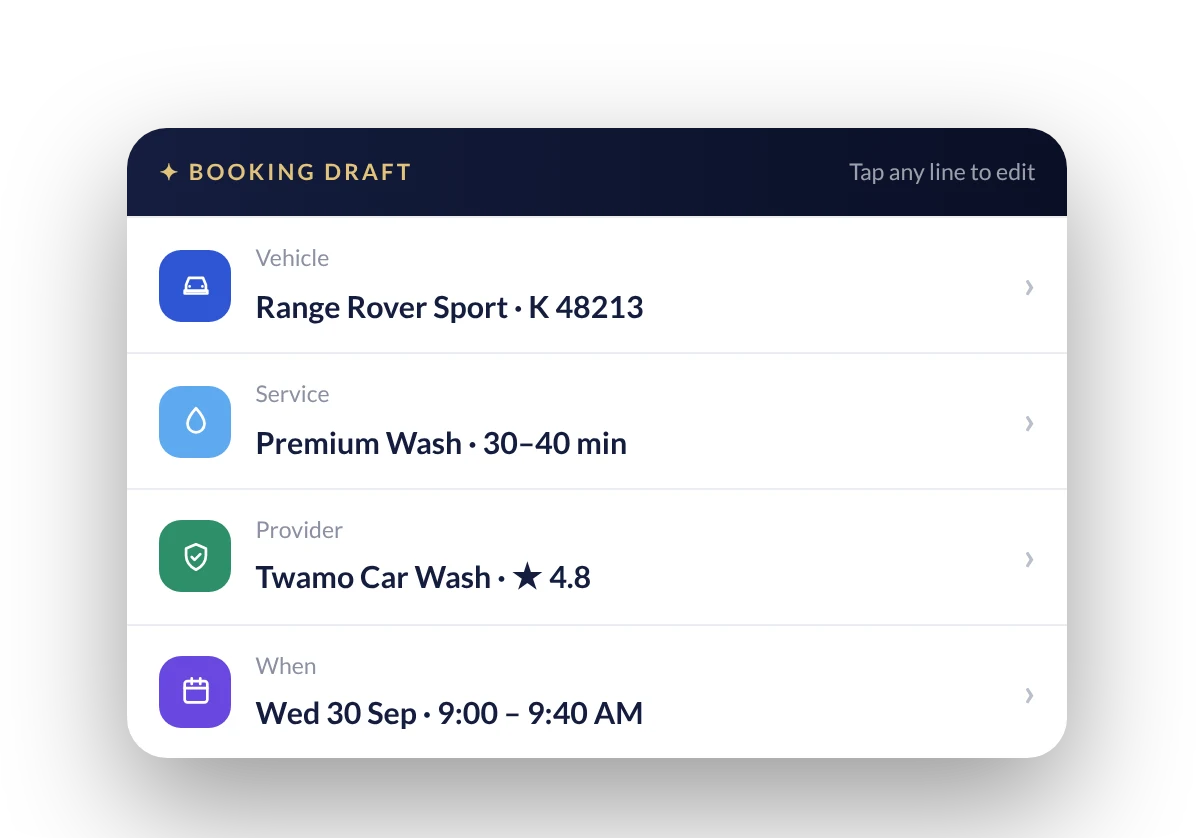
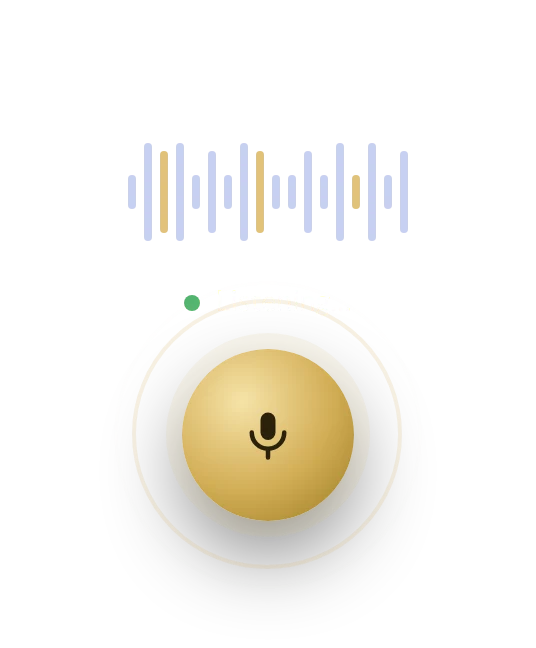
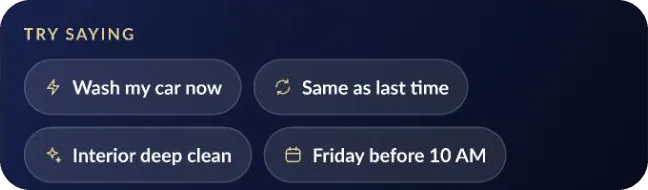
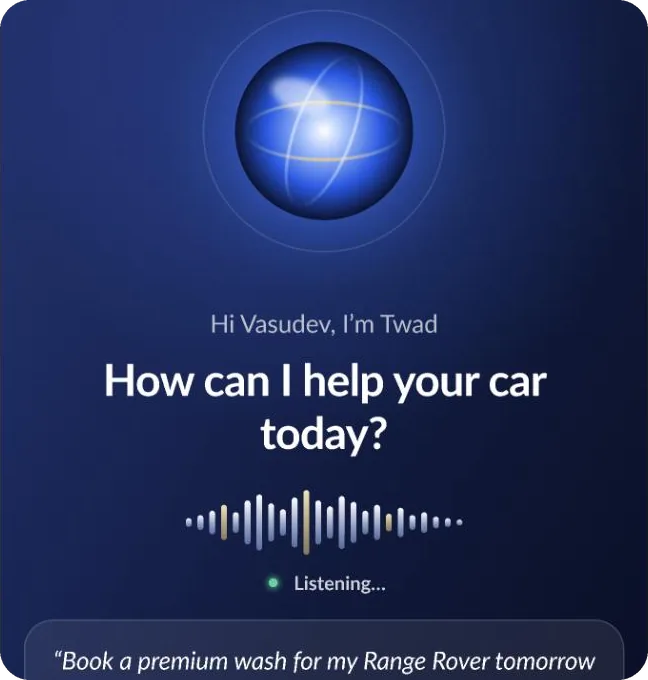
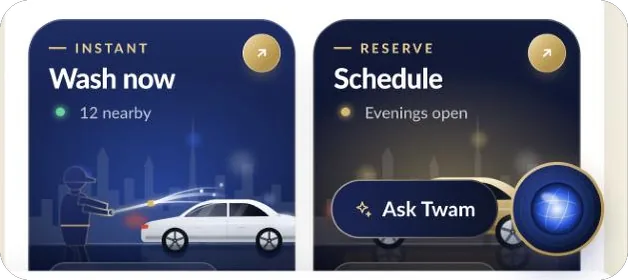
Tap the gold button and say what you want. Twam matches your saved car and address, checks nearby providers for the time you asked for, and hands you a finished draft to confirm and pay.
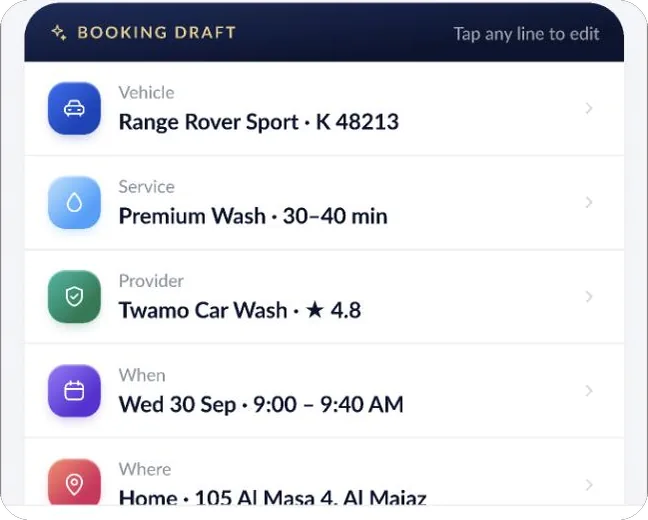
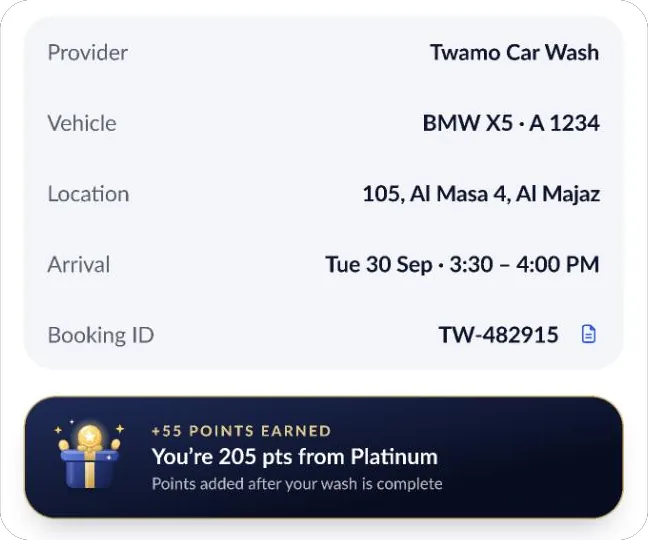
Both paths end on the same booking draft and the same payment screen. That kept the assistant honest: it can't book anything you couldn't have booked yourself, and you always see exactly what it chose.
I settled the layout of each screen in grey before any styling. Drag the handle to see how the wireframe became the final design.
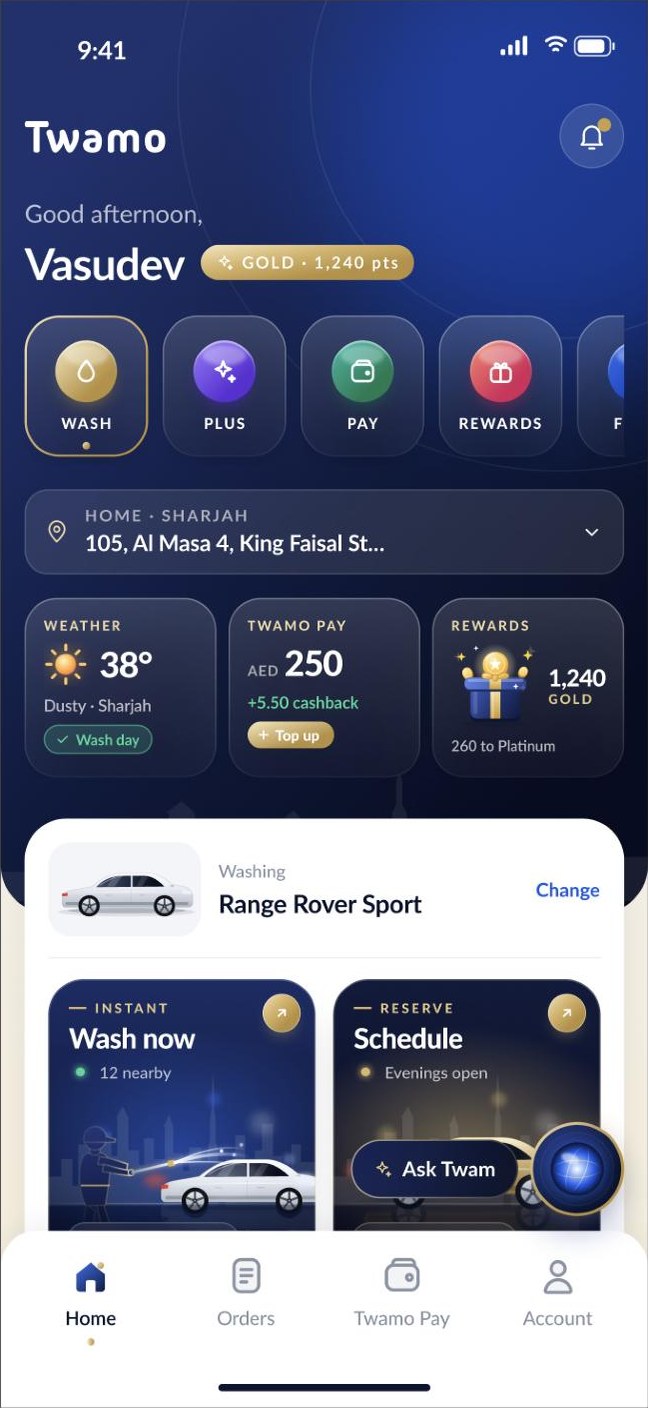
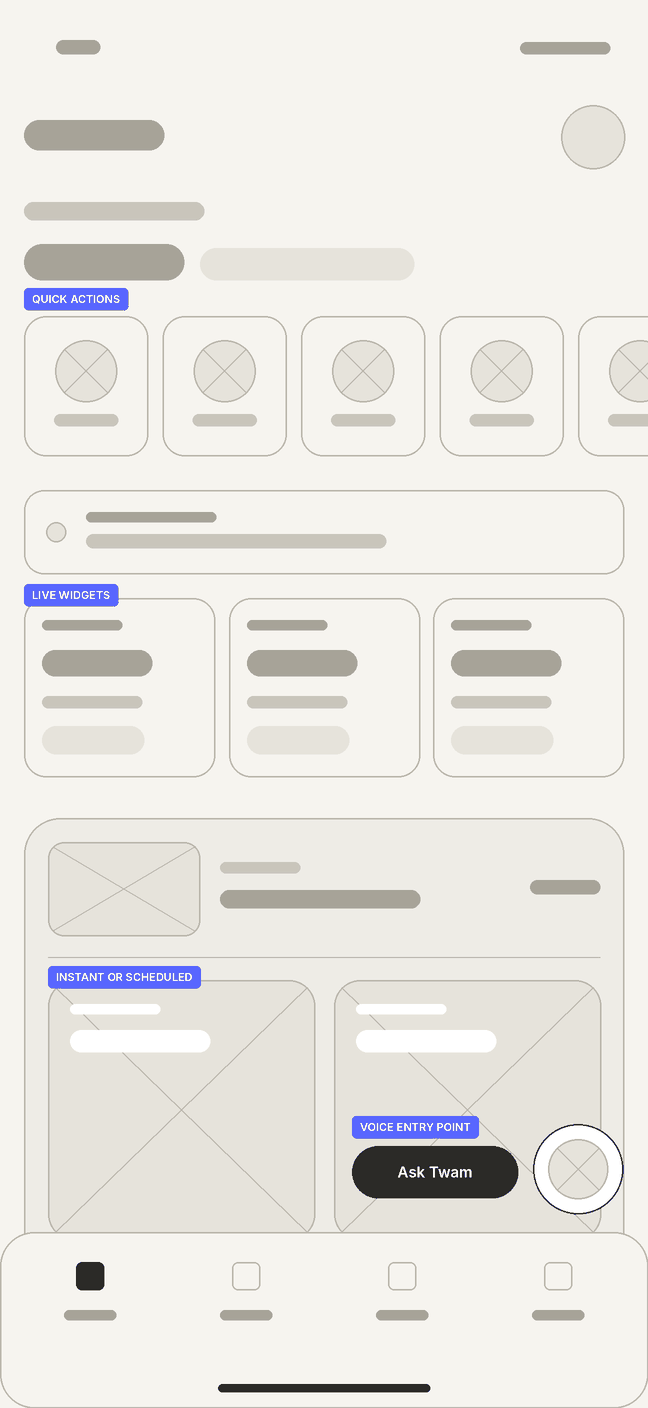 WireframeDesign
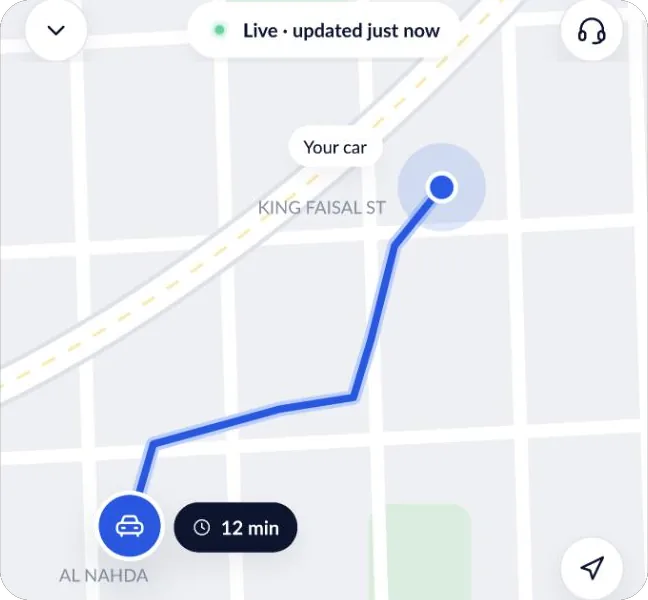
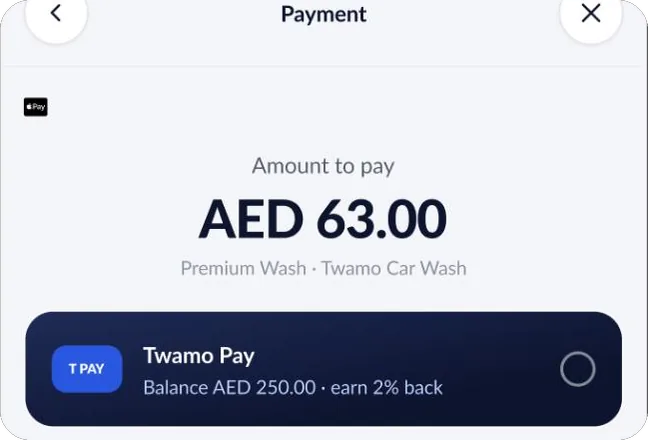
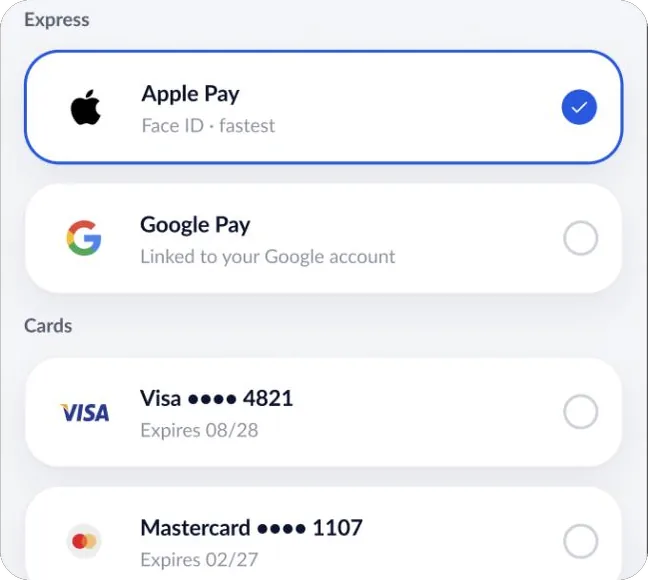
Every screen is assembled from the same parts: cards, chips, list rows, sheets and buttons, each with its states. Below is a selection from sign-in, booking, the assistant, payment and tracking.

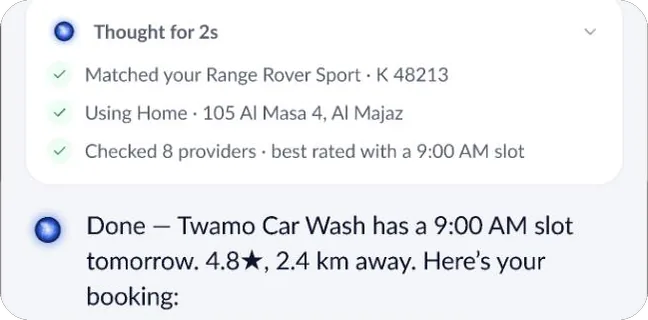
Before the draft appears, a short "Thought for 2s" list shows which car, which address and how many providers it checked. People trust an answer more when they can see how it was reached.
The draft is a list, not a sentence. Tap the time to change it, or ask a follow-up like "make it 10 AM". Paying is the only step that can't be undone, so it's the only one with a big button.
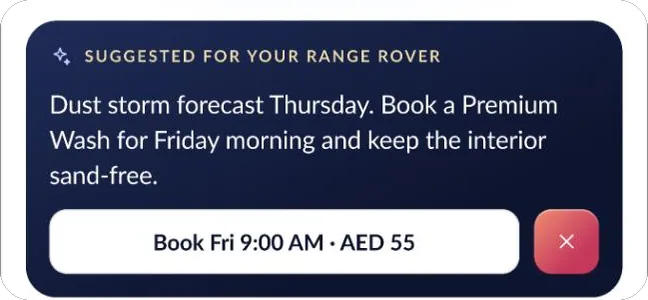
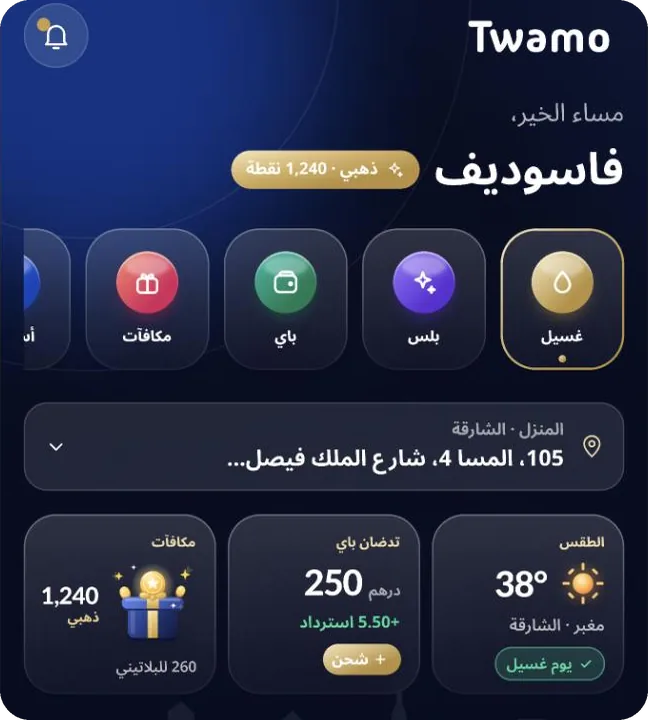
When dust is forecast, Twam suggests a wash for the day after, priced and ready to book in one tap. The home screen does the same with a small "Wash day" tag on the weather card.
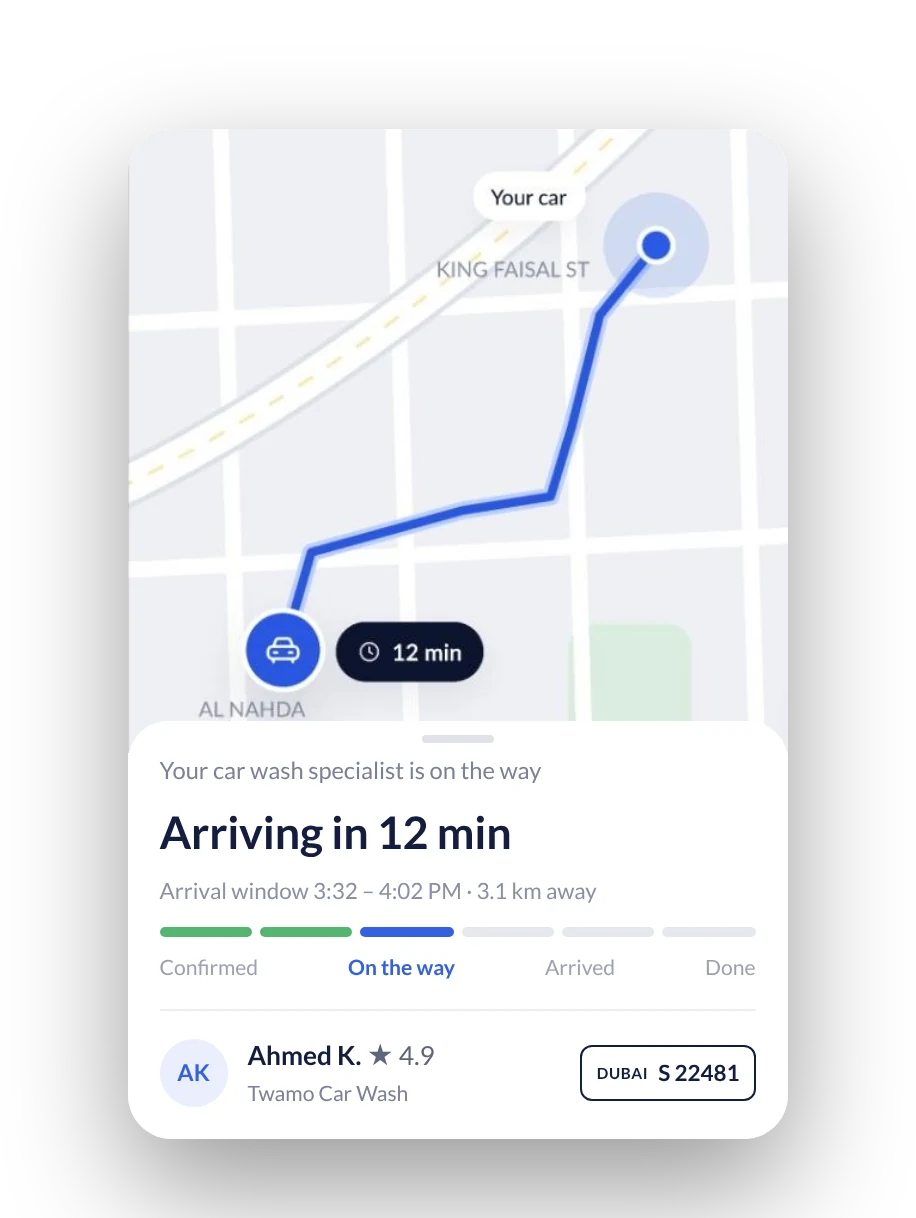
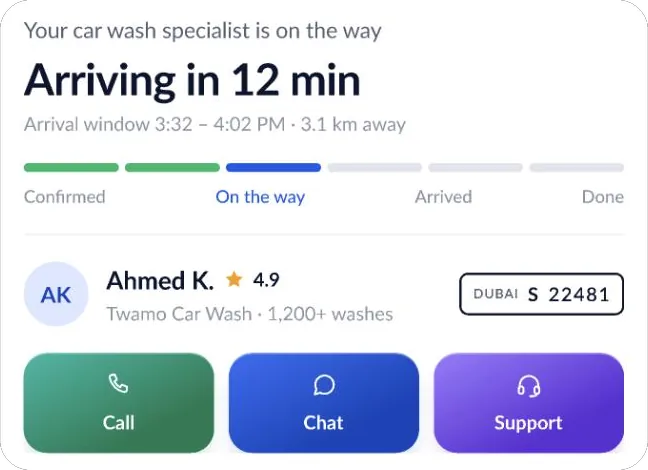
Once booked, the wash is followed like a ride: a live map, an arrival window, the specialist's name and plate, and one-tap call, chat or support.
The rest of the app follows the same system. The Arabic version isn't a translation pasted into English layouts: the whole screen mirrors, from the greeting and quick actions to the bottom navigation and the position of the assistant button.
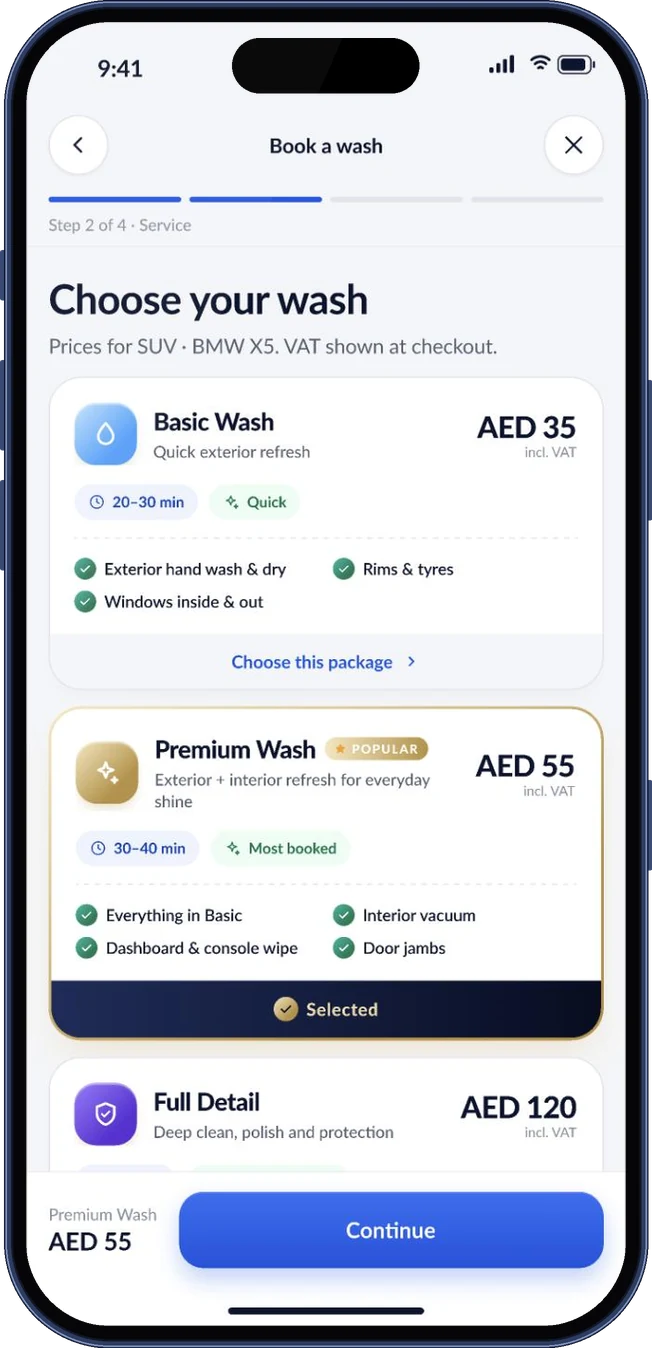
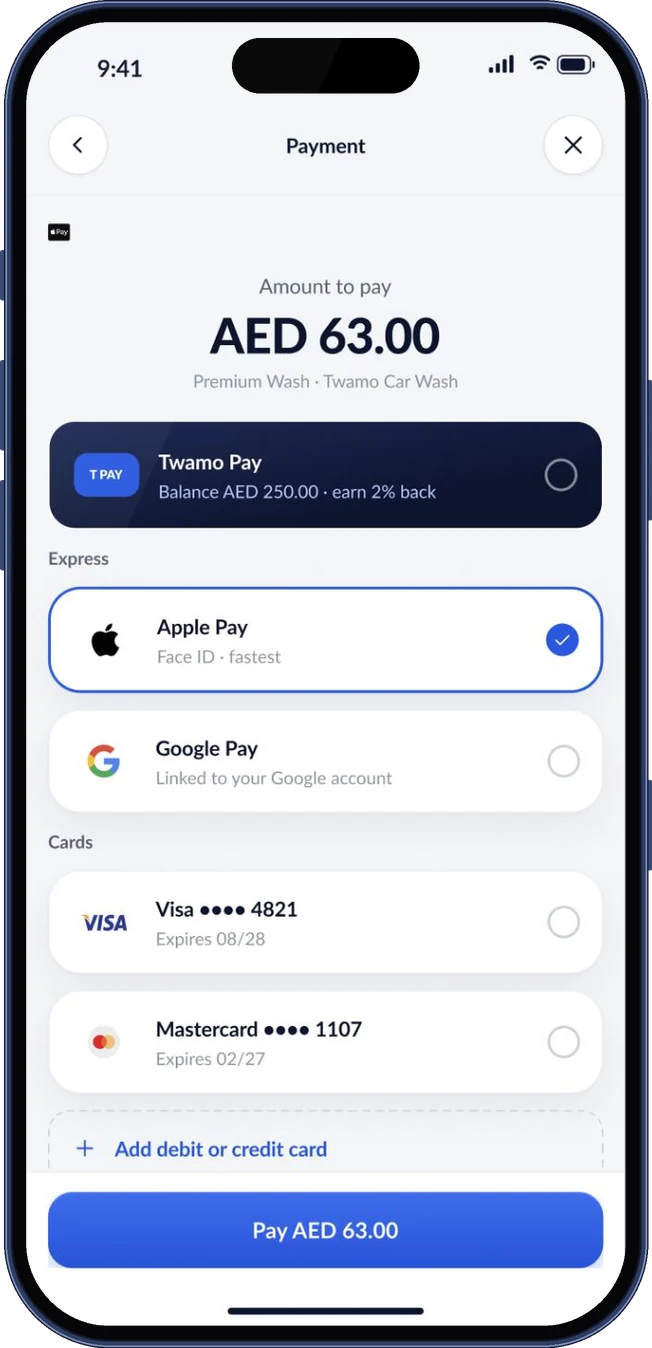
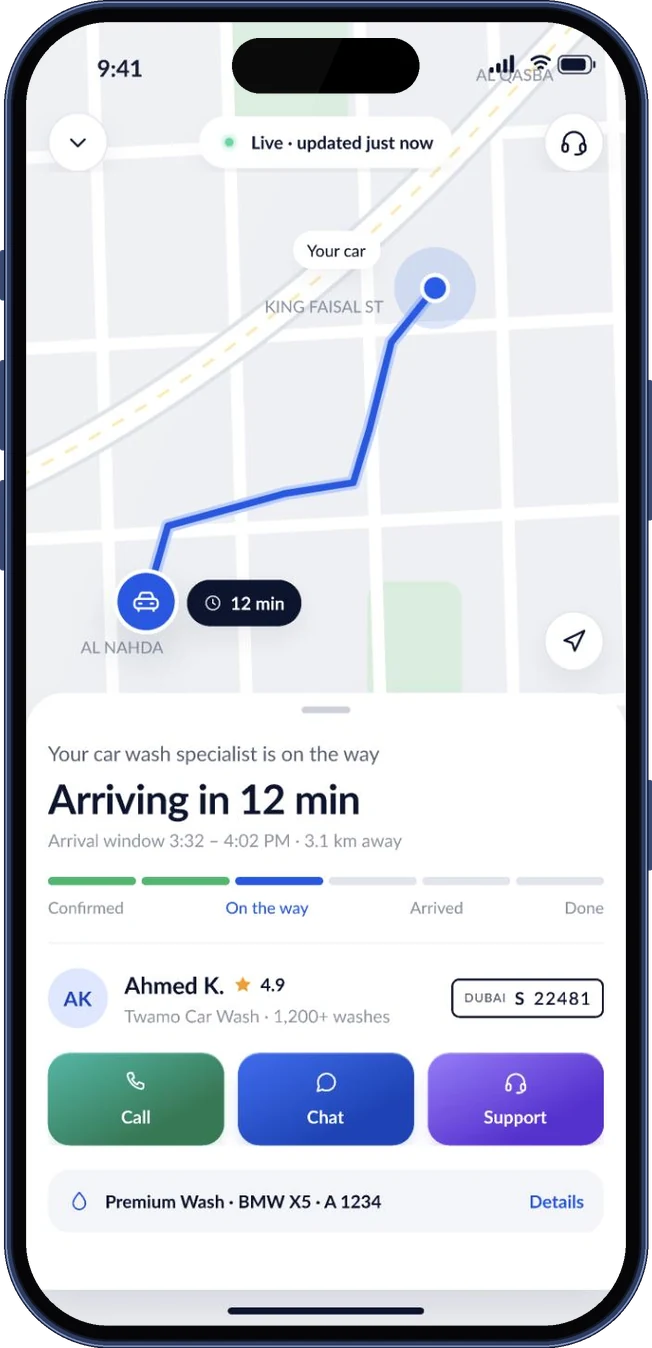
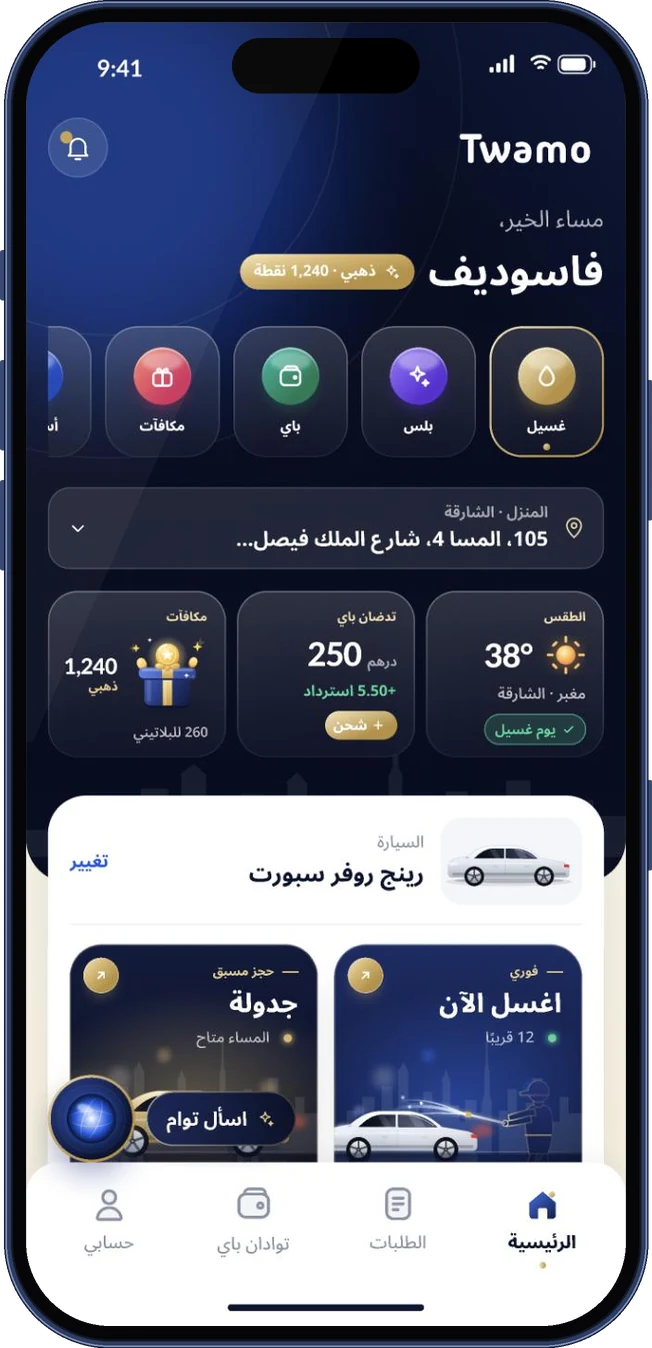
Twamo exists as a full clickable prototype: onboarding, both booking paths, payment, live tracking, orders, the Twamo Pay wallet, vehicles, account, notifications, the assistant and Arabic. Every screen is built from the shared library, with states and motion for the key moments.
The next step is usability testing with drivers in the UAE. These are the questions I'd test first:
or write directly — vasudevsra1995@gmail.com